
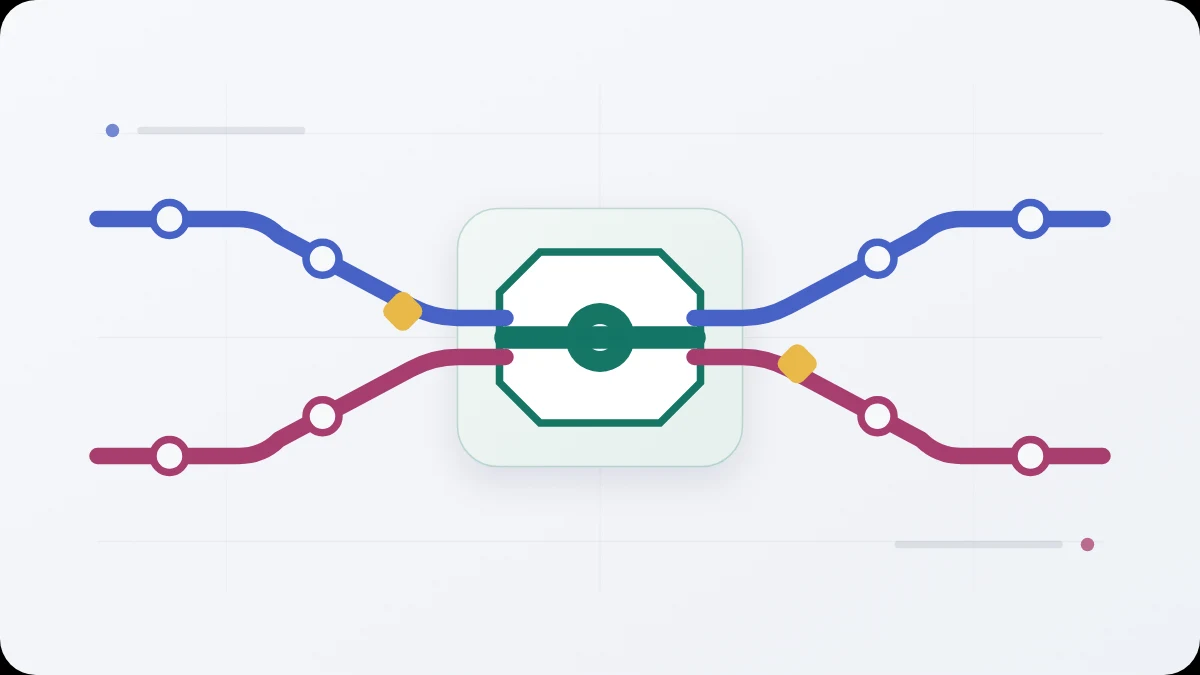
A better model separates three things: what needs to happen, when it comes back and what its current state is. Only then is it useful to assign a person to a particular next step.
The short answer
To share household responsibilities without constant reminders, keep a shared state for recurring matters: the next date, the person handling the next step when needed, and a state such as pending / done / skipped. Both people should see the same result. The aim is not to score who did more; it is to remove the need to remember and ask about each item.
Start with things that actually recur
List repeating matters from the last two or three weeks. Do not try to create a complete inventory of the household. Pick the ones that regularly produce one of these sentences:
- “we forgot about that”;
- “I thought you were doing it”;
- “I did not know it was already done”.
Those are good candidates for a shared recurrence.
Every recurrence needs four pieces of information
What
Name the outcome rather than the broad area. “Replace water-filter cartridge” is more useful than “kitchen”.
When
Use a date or a realistic rhythm. If the timing is flexible, the system can show an upcoming window, but it should not pretend to a precision that does not exist.
Who handles the next step
It does not have to be the same person every time. Responsibility can rotate, or the item can remain shared if either person can naturally deal with it when convenient.
What state it is in
A useful minimum is pending, done and skipped. “Skipped” matters. If you deliberately decide not to do an occurrence, it is better to record that than preserve an eternal overdue item.
Do not create a scoreboard unless you actually need one
History can help you understand when something happened. It does not have to be used to compare people.
A household organiser starts to work against its users when every action becomes a point, report or measure of productivity. In an ordinary home it is usually more useful for both people to know whether something still needs action.
A reminder should be the exception, not the process
If the system only works because one person repeatedly opens it and sends reminders to the other, you still have a household coordinator.
A better flow is:
- the matter has a visible recurrence;
- it appears in the shared view as the date approaches;
- the person doing it records the result;
- the other person sees the state without a separate message;
- the next occurrence is prepared.
A notification can help, but should not carry the whole responsibility on the lock screen.
What about responsibilities without fixed dates?
Not everything can be expressed as “every Monday”. Some matters recur because something happened: supplies ran out, something broke, a letter arrived or a plan changed.
Those are often better treated as a shared item with a next step rather than a fake recurrence. The principle is the same: one current version and a state visible to both people.
Example: checking household supplies
Instead of appointing one person to “keep an eye on everything”, you could create a two-week recurrence:
- date: Sunday;
- step: check five agreed categories;
- result: add missing things to the shared shopping list;
- state: done or skipped;
- next date: two weeks later.
That rhythm may not be right for your home. The important part is that responsibility is visible and ends in a specific state.
How Home Cadence models this problem
The Home Cadence specification treats recurring matters as recurring rules with separate occurrences and PENDING, DONE and SKIPPED states. Today is intended to surface current and approaching matters, and ordinary actions are designed to work offline.
The technical labels are not important to a household. The useful part is that history remains history while the next occurrence has its own visible state.
The pilot being prepared is not yet publicly available.
Questions
Should every household responsibility have an owner? No. Ownership helps when ambiguity would leave a task stuck. For some matters a shared state and the ability for either person to act is enough.
How often should a household app send reminders? There is no universal frequency. Start with the real recurrence. A notification should support the due date rather than replace the shared system.
What if you deliberately skip an occurrence? Record it as skipped and move to the next occurrence if that is the plan. Permanent overdue items make it harder to distinguish important matters from stale ones.