

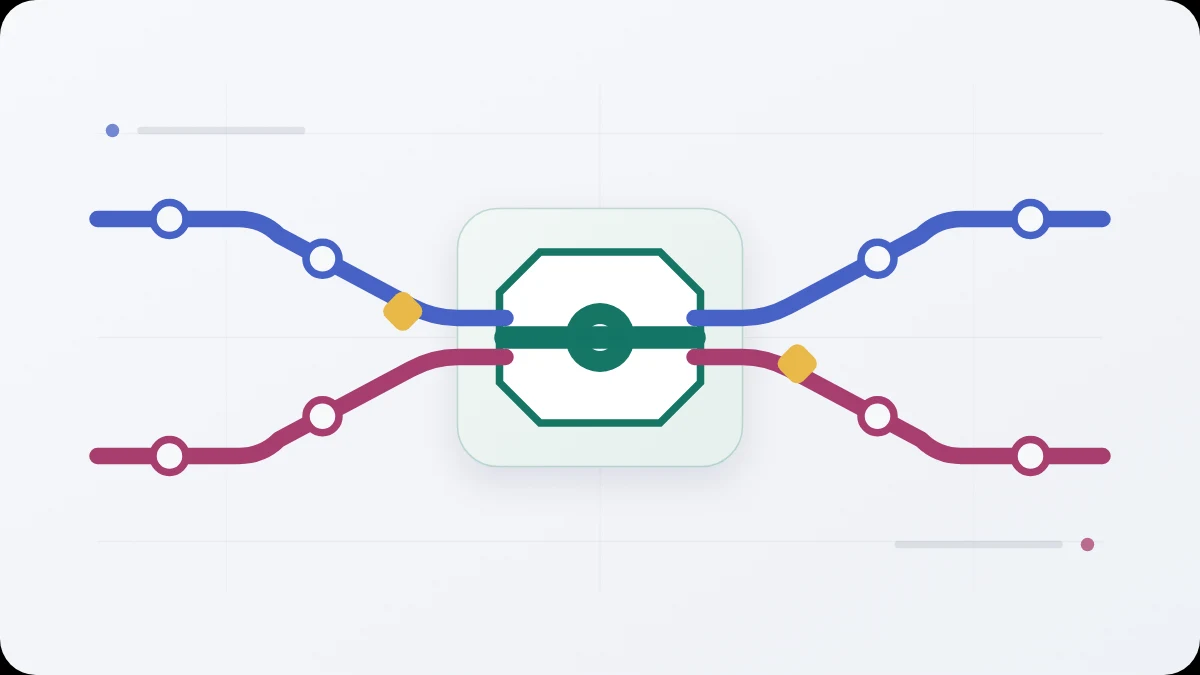
A good system should not divide people into a manager and an executor. It should give both people the same current context so either can take the next step without asking for a briefing.
The short answer
To organise a shared home as two people, start with five things: one place for shared state, visible due dates, simple recurrence for repeating matters, shared lists and a clear next step for larger projects. Each person should be able to check the status without asking the other. The system should reduce coordination work rather than create a new layer of household administration.
First decide what is genuinely shared
Not everything that happens at home needs to be put into a shared system. Personal tasks, private notes and individual calendars can stay where they are. A shared place is most useful for matters where missing or outdated information causes extra questions, duplication or mistakes.
Typical examples include:
- shopping and things that are running out;
- bills, due dates and recurring payments;
- recurring household responsibilities;
- small projects such as a balcony, storage space, repair or room preparation;
- weekend and trip preparation;
- documents and dates both people need to know about.
If information does not change what the other person needs to do, it does not need to be shared merely because it exists.
Shared state matters more than a shared conversation
Chat is good for conversation. It is less good at storing state.
A message saying “buy milk” is current only until the milk has been bought. Afterwards it remains in the thread among many other messages. The same applies to a photograph of a bill, a date sent in a message or a shopping list written in the morning. Each passes on information, but none necessarily tells you later whether action is still required.
For a shared home, it helps to have a record that answers simple questions:
- what needs attention;
- by when;
- whether somebody has already dealt with it;
- what will happen again;
- what the next step is.
That is shared state. Conversation can support it, but should not be the only place from which the current state has to be reconstructed.
Separate responsibility from execution
“Who will do this?” and “who makes sure this does not disappear?” are different questions.
One person may pay a bill, but both should be able to see that it has been paid. One person may start a shopping list, but the other should be able to add something and use the same list in the shop. In a home project, one step may belong to one person and the next to the other without creating a permanent household project manager.
A useful system shows responsibility where it matters while keeping the shared state visible to both people.
Five layers cover most ordinary weeks
1. Today
One place for matters that genuinely need attention now: a due date, an overdue item, the next project step or a recurring matter. It should not become a second full calendar. Its job is to surface what needs action.
2. Recurring matters
Things that repeat should not have to be remembered from scratch. If something happens weekly, monthly or every few weeks, the system should remember the next occurrence and show its state: pending, done or deliberately skipped.
3. Lists
A shopping or preparation list becomes useful when both people see the same version and can update it without sending a separate confirmation message.
4. Projects
Anything larger than a single task needs a next step. “Sort the balcony” does not say what to do today. “Measure the width”, “choose the finish” and “order the parts” do.
5. Dates and documents
You do not need to move every household document into one app. It is enough for an important date, status and relevant file to be easy for both people to find when they are actually needed.
The system should still work when one person is offline
A household does not stop functioning in a shop with poor reception, a garage, a train or during a temporary outage. Basic information should remain available on the device, and ordinary supported changes should be able to save locally and be sent later.
It also matters to show the difference between “saved on my phone” and “reached the other person”. Hiding that distinction creates false certainty. A clear “waiting to send” state is more useful.
A conflict does not mean the system should guess
Two people can change the same thing before their phones exchange the latest state. Many independent changes can be combined automatically. If an automatic choice could remove meaningful information, it is better to retain both versions and ask the people involved to decide.
That is an important difference between a shared-state system and a simple list that silently overwrites whichever version arrived first or last.
A simple seven-day test
Do not migrate the whole household on day one. Choose three things that genuinely recur:
- one shared list;
- one recurring date or responsibility;
- one small project with several steps.
After a week, check:
- whether both people looked at the shared state without being reminded;
- whether there were fewer status questions;
- whether any part of the system created more work than it removed;
- whether one person still had to remember to keep everything up to date.
If the last answer is yes, the system has moved the coordination burden into a new tool rather than reduced it.
How Home Cadence approaches the problem
Home Cadence is being designed around a shared state for two equal people. The Android scope being prepared includes Today, recurring matters, shopping, bills, projects and plans. The product is designed to be local-first: supported changes save on the phone first and update the shared state when connectivity returns.
This is still a pilot being prepared, not a publicly available product. You do not need to wait for the app, however, to test the underlying idea: keep one shared version of the matters that genuinely require shared awareness.
Questions
Does shared household organisation mean using one shared calendar? No. Calendars are good at events in time, while shopping, bill status, checklists and project state need different structures. A shared system can use dates without copying an entire private calendar.
Does every household responsibility need to be assigned to one person? No. Assignment is useful when it is important to know who owns the next step. In many cases the more important point is that both people can see the current state.
Is this only relevant to couples? No. It can apply to any two adults running a home together, including partners, siblings, friends or housemates. The Home Cadence version being prepared is specifically limited to exactly two people.