

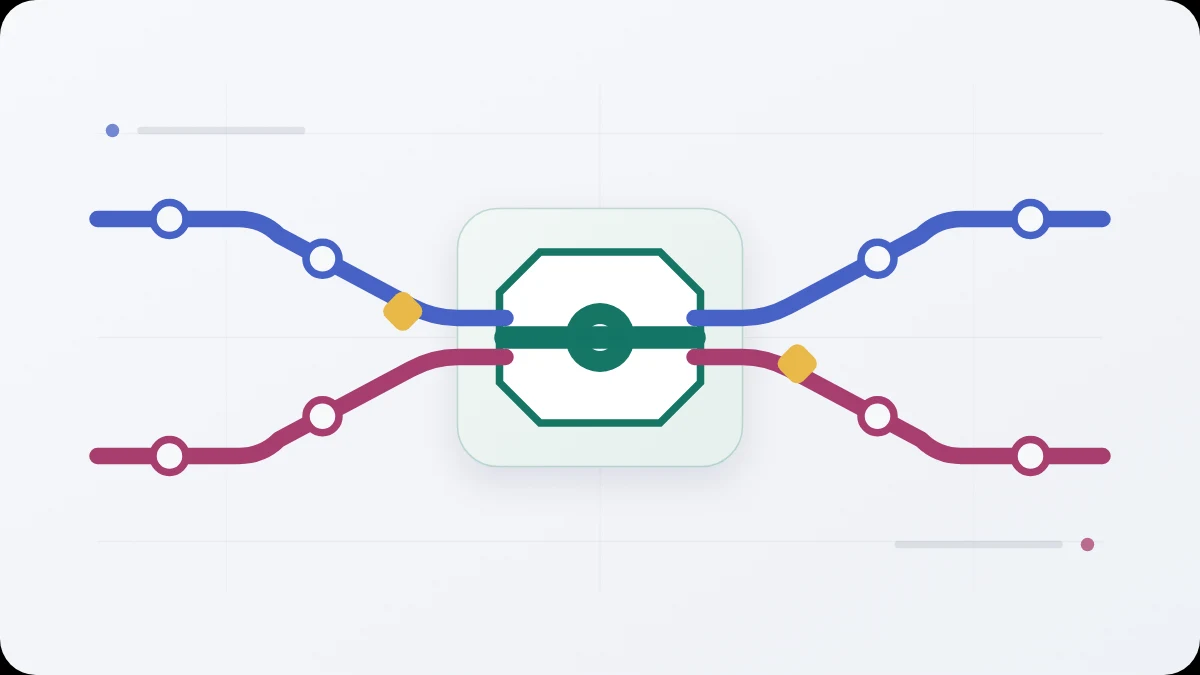
That is a coordination problem rather than a banking problem.
The short answer
A simple shared bill system for two people keeps the name, due date, recurrence, state and, where useful, the person handling the next step. It does not need bank access. After paying through the appropriate bank, one person changes the state and the other can see it without asking “has this been paid yet?”.
Separate bill information from the payment itself
A bank executes the transfer and records the transaction. A household organiser can coordinate the work around it.
Those layers do not need to be connected.
For coordination, you will usually need only:
- a recognisable bill or obligation name;
- a due date;
- whether it is one-off or recurring;
- a state such as needs action / paid / skipped where that makes sense;
- the person handling the next step when needed;
- an optional document or note if both people genuinely need access to it.
Do not store passwords, authorisation codes or information that belongs solely in the bank or a password manager.
The shared status is the key part
A bill sitting in an inbox still needs interpretation. Even if both people can read the same email, it does not automatically tell them whether somebody has already acted on it.
A shared state changes the flow:
- the due date appears before payment is required;
- one person makes the payment in their own banking service;
- they mark the bill as paid;
- the other person sees the new state without an extra message;
- if it is recurring, the system prepares the next occurrence.
An amount does not always belong in a notification
A shared app may hold an amount if both people need it, but the phone lock screen is a different context. A notification visible next to a colleague, on public transport or on a desk does not necessarily need to show the service name and amount.
A sensible pattern is a signal about a change or due date without sensitive detail. The detail can be shown after the app is opened.
A recurring bill is not a copy of the previous bill
It helps to separate the rule from each occurrence.
For example:
- rule: internet, monthly;
- occurrence: September 2026, due 18 September, paid;
- next occurrence: October, with its own state.
That means changing a future date should not rewrite history and pretend previous months were different.
What about a shared budget?
Budgets and bills can meet without requiring bank access. A simple household budget can show categories and manually entered amounts. That is a different class of tool from a bank-account aggregator or a payment service.
If you need automatic transaction import, account analysis and financial reconciliation, choose a financial product designed for those tasks. Home Cadence is not a bank or payment service.
Reduce the amount of data you need to hold
For every field, ask whether the other person needs it to act.
“Internet — due 18 September — paid” may be enough. A customer number, full invoice, amount and transfer history can remain in the primary source if they do not need to be part of the shared household flow.
Less data means less maintenance and less information that needs protection.
How Home Cadence approaches the problem
The Home Cadence scope being prepared includes bills with due dates, recurrence, payment state and reminders. Amounts are intended to stay outside analytics, while notifications are intended not to contain titles, amounts or other shared household content.
That does not mean bank integration. Home Cadence is intended to help maintain shared state while the actual payment remains in the appropriate financial system.
Questions
Do shared bills require a joint bank account? No. The due date and state can be shared even when each person uses their own banking service.
Should you store transfer confirmations in the household app? Only if you actually need them there. In many situations the bank should remain the primary evidence and the household system only needs the completion state.
Should the app automatically mark a bill as paid? Only if it has a reliable source for that fact. Without bank integration, an explicit user action is safer than guessing.